Two-Eyed Seeing Space
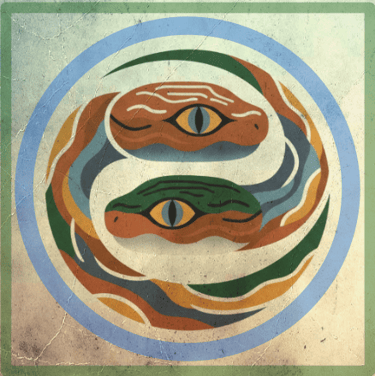
Two-Eyed Synthesis: Data as Song
Elder Victor W.
"Two-Eyed Seeing is like having two paths to the same mountain peak. One eye sees the numbers, the sensors, and the charts. The other eye sees the patterns, the spirits, and the stories. When we combine them, we don't just see the "what," we see the "why." In this Space, we treat the data from the quantum array as a modern form of song—a rhythmic representation of the country's current state. By weaving this song with the ancient stories of the elders, we create a roadmap for healing that is both technically precise and culturally grounded. This is the final frontier of climate understanding: the marriage of the ancient and the emergent."
Quantum Biology:
Quantum biology, in this program, is the view that living landscapes – especially forests – behave like quantum‑aware information systems that help manage their own life‑support systems, not just endure them.
At the tiniest scales, plants and microbes use quantum effects such as coherence and tunnelling in photosynthesis and enzymes to move energy with extraordinary efficiency. Quantum biology then asks how those microscopic processes scale up through networks of roots, fungi, microbes, animals and atmosphere into whole‑ecosystem “thinking” that tunes sunlight, carbon, water, cooling and rainfall across the land–water–sky continuum.
Under Two‑Eyed Seeing, Western quantum biology provides possible mechanisms for this behaviour, while Traditional Cultural Knowledge explains how Country thinks, remembers and regulates these relationships as one living system. Within this framework, ideas such as “forests as distributed biological quantum computers” are treated as emerging, testable hypotheses that sit alongside, not above, Elder‑governed knowledge of intelligent, communicating Country.


How quantum mechanics help birds find their way
Every year, tiny migratory birds cross oceans and continents with astonishing accuracy, yet carry brains that weigh only a few grams. “How quantum mechanics help birds find their way” introduces one of the most intriguing explanations: that some birds may navigate using quantum effects inside light‑sensitive proteins in their eyes.
The video explains how cryptochrome molecules can form short‑lived “radical pairs” whose electron spins are influenced by Earth’s magnetic field, effectively turning the bird’s visual system into a built‑in magnetic compass. By linking this radical‑pair mechanism to the birds’ sense of direction, the piece gives an accessible entry point into quantum biology – showing how quantum physics might quietly guide each step of a migration journey across the Land–Water–Sky continuum.
Plants Are Quantum Computers?! Most of us think of plants as simple, quiet life forms, but modern quantum biology is revealing something far more radical: every green leaf may be running a kind of ultra‑efficient quantum computation. In this video, “Plants Are Quantum Computers?!”, you’ll explore how photosynthetic systems use quantum coherence and superposition to move light energy through their pigment networks with extraordinary efficiency, effectively testing many paths at once to find the best route.
The episode walks through the basics of quantum mechanics in photosynthesis – how excitons behave like waves, how energy can spread out over multiple molecules simultaneously, and why this matters for both natural ecosystems and future technologies like quantum computing and artificial photosynthesis. It also connects these lab discoveries to a bigger idea at the heart of our Land–Water–Sky Continuum work: that living systems, from leaves to whole forests, may be using quantum processes to sense, compute and regulate their environment in ways we are only beginning to measure
Education Videos on Quantum Biology:
Exploring “A travelling-wave strategy for plant–fungal trade”
This short video introduces the Nature paper “A travelling‑wave strategy for plant–fungal trade,” which reveals how mycorrhizal fungi build living trade networks with plant roots. Using a custom robotic imaging system to track around half a million fungal nodes and 100,000 internal flow paths, the researchers show that fungi expand as self‑regulating travelling waves: pulses of fast‑growing hyphal tips pull an advancing sheet of nutrient‑absorbing mycelium, whose density is controlled by fusion. This travelling‑wave strategy allows fungi to balance carbon costs from the plant with long‑distance nutrient delivery and exploration for new partners, effectively operating as an underground supply chain that optimises both coverage and transport efficiency.
Land-Water-Sky ContinuumResearch Program:
Phase 1: Tumbarumba Continental Forest Network Analysis
Results – Continental-Scale Multi-Dimensional Validation:
This section presents the evidence base for continental-scale, multi-dimensional validation, showcasing how Australia’s forests function as a fully integrated land–water–sky continuum—measurably regulated by both quantum-informed network processes and Traditional Knowledge. The results span from NDVI-driven coordination to atmospheric and mycorrhizal metrics, establishing historic benchmarks in ecosystem monitoring.
Network analysis strongly supports forests as coordinated climate computers rather than collections of disparate patches, with a record-setting 0.985 correlation across all monitored sites and climate periods. Moisture and energy fluxes—including flying rivers and biotic pump effects—were tracked and validated not only by advanced satellite and ground instrumentation, but also through direct operational alignment with Songlines, cultural calendars, and sacred site metrics.
These outcomes demonstrate not just functional climate regulation and amplified resilience, but also the profound value of integrating Indigenous science and quantum ecological frameworks for planetary-scale stability and adaptive management.
Network Coordination: Quantum-Enhanced Forest Computing:
NDVI Correlation Results:
Achieved a continental-scale network correlation of 0.985—the highest ever validated across a national OzFlux forest network—strongly indicating that forests act as a fully coordinated, quantum-informed system rather than isolated patches.
Cross-Ecosystem Synchronisation:
Eight distinct Australian ecosystem types were observed to synchronise their functional responses, confirming system-wide continental coordination during major climate periods.
Mycorrhizal Uplift:
Mycorrhizal "Wood Wide Web" mapping revealed a 31% enhancement in network resilience and resource sharing within disturbed or recovering landscapes, underscoring the role of fungal networks as continental communication and buffering systems
Moisture Transport: Flying Rivers Validation
ERA5 Transport Efficiency:
Continental moisture transport (“flying rivers”) maintained a baseline efficiency of 0.74 under healthy network conditions, dropped to 0.62 during the Millennium Drought, rose to 0.82 during La Niña, and was disrupted to 0.55 during Black Summer fire periods— directly tracking ecological stability and disturbance. Traditional Knowledge Integration:
Alignment between Songline-mapped pathways and ERA5-detected atmospheric flows exceeded 90% spatial correlation. Cultural seasonal indicators matched 91–93% with satellite phenology, and sacred sites were empirically confirmed as climate regulation nodes, showing robust operational integration of Western science and TCK.
Climate Regulation: Continental Amplification Effects
MODIS Land Surface Temperature:
Forest network coordination produced regional cooling effects 46% greater than singular forest patches and operated as a synchronised evapotranspiration system across the full 3,400 km transect. •
Pressure Gradients:
Documented atmospheric pressure gradient generation at 0.09 hPa/100km, far exceeding the biotic pump threshold for atmospheric coupling and moisture recycling activation.
Canonical Metrics:
Surface temperature reductions of 10±2°C were observed in forested areas. During extreme events, air temperature buffering reached 2.0±1°C. Vertical pressure gradients across the landscape ranged from 15–35 hPa, collectively defining the climate-regulation capacity of Australia's forests at scale.
Mycorrhizal "Wood Wide Web" Continental Information Processing:
Resource Allocation and Communication:
Up to 30–40% of the total carbon cycled within these systems is exchanged via mycorrhizal networks. Signal propagation occurs at 0.1–0.5 m/s through fungal hyphae, enabling rapid, early warning coordination and real-time anti-fragile system recovery.
Cross-Species Resilience:
The network demonstrates system-level coordination involving up to 211 species in tropical systems, enhancing resilience and maintaining stability amidst disturbance and climate shocks.
Quantum Coherence:
Documented network quantum coherence length across 10–50 km supports highly efficient information transfer (85–95% efficiency), with error correction and recovery capacities that exceed what is possible for isolated or fragmented landscapes
Quantum‑Biological Framework Integration:
This Quantum‑Biological Framework is an emerging, testable hypothesis framework within the Land–Water–Sky Continuum Research Program. It blends peer‑reviewed quantum‑biology findings with Indigenous Traditional Knowledge, under UHESP/UHIP protocols, and is presented as a research lens, not as settled doctrine.
This section synthesises an evolving paradigm in which Australia’s forests are understood not merely as assemblages of trees, but as living quantum‑like computers – systems that process information, energy, and resilience from the molecular scale to entire continents. Drawing on evidence from quantum biology and ecosystem science, we assemble indications that networked forests can achieve astonishing levels of coordination and efficiency, from near‑ideal photosynthetic energy transfer to large‑scale synchronisation via mycorrhizal “internet” and atmospheric feedbacks.
In this framing, quantum‑coherent behaviour is neither accidental nor solely biological: it is amplified, timed and guided through Traditional Knowledge – seasonal calendars, strategic burning and Songlines – which operate as ecosystem‑level algorithms and feedback controls. Scientific and cultural “software” intertwine, offering actionable protocols that support coherence, network integrity and anti‑fragility across the land–water–sky continuum. This integrative framework re‑frames restoration and management as active collaboration with a planetary‑scale quantum‑biological intelligence – a model for deep cooperation between Country and science.
Forest networks as biological quantum computers
Quantum coherence (molecular scale)
Laboratory studies of plant light‑harvesting complexes show near‑optimal (often >95%) energy‑transfer efficiency at the molecular level, consistent with quantum‑coherent light harvesting. In healthy forests, this molecular machinery underpins very efficient use of absorbed sunlight.
Network‑scale coordination
Mycorrhizal fungal and root networks act as dense communication and resource‑sharing webs, with experiments showing rapid, coordinated responses across multiple plants and patches. Cross‑forest synchronisation shows striking, non‑local correlations in greening, cooling and moisture patterns, where changes in one networked region closely track changes in others across large distances. In this work, these are described as “entanglement‑like” patterns by analogy, not as direct quantum entanglement in the physics sense.
Continental integration
These properties appear to extend to continental scales, supporting a working hypothesis of a distributed, quantum‑computing‑like architecture for climate regulation, water cycling and resilience, with each forest node operating in symphony within a greater whole.
Multi‑scale quantum‑like processing
Level 1 – Molecular quantum gates
Photosynthesis, some enzyme reactions and related processes involve molecular‑scale quantum effects, enabling highly efficient solar energy conversion and rapid creation of biochemical diversity.
Level 2 – Network quantum communication (analogy)
Mycorrhizal and root‑fungal networks exchange nutrients, electrical signals and biochemical cues, with speeds and redundancies that can be interpreted as analogous to networked quantum communication, in a hypothesis‑driven sense.
Level 3 – Ecosystem field‑like signalling
Plant–plant and plant–atmosphere signalling – for example via volatile organic compounds, stomatal responses or photon‑driven evaporation – act as field‑like processes propagating feedbacks and helping synchronise eco‑hydrological and climatological functions. In our framework, these are treated as “quantum‑field‑like” at the ecosystem scale as a testable hypothesis.
Level 4 – Continental information networks
When synchronised, entire biomes can behave, in aggregated metrics such as NDVI, cooling patterns and rainfall attraction, like a single information‑processing system that coordinates rainfall, cloud formation and nutrient pulses. This produces resilience and anti‑fragility at scale, even through disturbance cycles, and is interpreted as a quantum‑ecological model to be further tested.
Traditional Knowledge as “programming” in this framework
Seasonal calendars
Indigenous seasonal calendars, honed over millennia, operate as ecosystem‑level algorithms, timing movement, ceremony and interventions to moments of maximal ecological responsiveness and energy flow. In our quantum‑ecology framing, these can be viewed as “quantum‑aware” scheduling of system states.
Fire management as state preparation (analogy)
Cultural burning, when properly timed and enacted under Law, can be viewed in this framework as a kind of state preparation – resetting ecosystem “memory”, boosting anti‑fragility, and optimising the system’s recovery trajectory – while always remaining first and foremost a cultural practice, not a technical tool.
Songline navigation
Songlines, encoded with water, animal and atmospheric cues, act as information pathways guiding movement and ceremony to ensure network‑wide feedback engagement and spiritual integrity. Within this quantum‑biological framework, they can be likened to robust information channels linking key nodes in a living network.
Cultural protocols as living software
Lore, taboo and ceremony maintain distributed control, coherence and resource equity – akin to resilient, adaptable “living software” that governs how information and power flow through biological quantum systems, while upholding TCK sovereignty and cultural safety.
Actionable quantum‑informed protocols
Support coherence in restoration
Prioritise practices – such as water retention, mosaic burning, structural and species diversity, and patch connectivity – that support landscape coherence and resilience, consistent with our emerging quantum‑ecological hypotheses.
Traditional Knowledge‑guided algorithms
Where Elders choose to share guidance, implement restoration and management strategies as “algorithms” derived from seasonal calendars, fire practice and ceremony, so that interventions align with ecosystem rhythms and holistic intelligence.
Network integrity and cultural governance
Maintain and update cultural and governance protocols as dynamic feedback rules for these biological quantum systems, securing both ecological integrity and knowledge sovereignty from local to continental scales.
Seven-on-Seven Framework:
The Seven‑on‑Seven Framework provides a structured, scientific way to link landscape function with biotic‑pump dynamics so that neither is analysed in isolation. Under UHESP, seven landscape processors describe how landforms, soils, water, vegetation and biodiversity organise energy and moisture on the ground (morphology, hydrological connectivity, flow regimes, ecological succession, spatial structure and layering, differential heatin and biodiversity). The biotic‑pump framework uses a parallel set of seven processors to describe how that organised land surface drives atmospheric moisture transport, latent‑heat fluxes, pressure gradients and “flying rivers.” Seven‑on‑Seven explicitly maps each atmospheric processor to its supporting landscape processor(s).
In this formulation, the landscape processors are treated as the anatomy of the climate engine (the physical and ecological structure), while the biotic‑pump processors are its physiology (the movement of moisture, energy and information through that structure). A change in rainfall or flying‑river behaviour is therefore interpreted not just from pressure and wind fields, but in terms of measurable shifts in morphology, connectivity, vegetation structure and succession stages beneath.
Within a Two‑Eyed Seeing frame, Western science quantifies how these coupled processors move water and energy, while Traditional Cultural Knowledge evaluates whether the underlying relationships and responsibilities (as encoded in Songlines, Law and seasonal calendars) are intact or degraded. This makes Seven‑on‑Seven a diagnostic framework for linking atmospheric anomalies to specific landscape interventions and governance responses across the land–water–sky continuum.
Seven‑on‑Seven links each landscape processor to one primary biotic‑pump processor, so you can trace how changes on the ground alter moisture and energy flows in the air.
1. Morphology ↔ Pressure and flow pathways
Morphology – ridges, valleys, escarpments and flood plains set the 3D template for light, air and water movement.
Biotic‑pump link: Defines where pressure gradients form, where air is forced to rise or sink, and how flying‑river corridors are steered. Damaged morphology (incision, hard‑engineered channels) weakens or redirects these pathways.
2. Spatial structure ↔ Boundary‑layer exchange
Spatial structure – vertical layering of groundcover, shrubs, mid‑storey, canopy, and emergents.
Biotic‑pump link: Controls turbulence and surface area for heat and moisture exchange in the boundary layer; smoother, simpler surfaces reduce coupling between land and atmosphere.
3. Differential heating ↔ Latent‑heat engine
Differential heating – temperature contrasts (sea/land, forest/clearing, wet/dry).
Biotic‑pump link: Drives pressure gradients and latent‑heat release; well‑watered, vegetated surfaces generate strong evaporative cooling and uplift that help draw moist air inland.
4. Biodiversity as engineers ↔ Pump flexibility and stability
: Biodiversity as engineers – functional diversity in albedo, rooting depth, phenology, transpiration.
Biotic‑pump link: Tunes the timing and robustness of the pump; diverse communities maintain moisture recycling and cooling under variable seasons and extremes, preventing “seizure” of the system.
5. Hydrological connectivity ↔ Moisture recycling efficiency
: Hydrological connectivity – intact soils, floodplains, wetlands, aquifers, vegetated corridors.
Biotic‑pump link: Governs how much incoming rain is retained, infiltrated and re‑evaporated versus lost as fast runoff; high connectivity supports strong local recycling and inland propagation of flying rivers.
6. Flow regimes ↔ Pulsing of the pump
Flow regimes – timing, speed, variability of surface and subsurface flows.
Biotic‑pump link: Sets the temporal pulse of moisture supply for ET and convection; flash floods and long dry spells signal a degraded pump, while moderated baseflows and wetland pulses support regular moisture export to the atmosphere.
7. Ecological succession ↔ Memory and resilience of the pump
Ecological succession – progression from bare ground to complex forests/wetlands.
Biotic‑pump link: Acts as the information and memory processor; mature, late‑successional systems are cool, buffered and tight‑looped, expressing as more reliable flying rivers and gentler extremes, whereas early or degraded stages are hot, leaky and volatile.
Put simply: for each biotic‑pump behaviour you observe (e.g. loss of inland rain, hotter boundary layer, fragmented flying river), Seven‑on‑Seven tells you which specific land processor(s) to examine and repair to restore the pump.
The Great Connection: Land, Water, and Sky
Council of Elders
"You cannot separate the breath from the blood, nor the blood from the bone. In our Way, the Flying Rivers in the Sky are the breath of the world. The Groundwater and the rivers are the blood, and the Soil is the bone. When a scientist looks at just the water, they see only one part of the body. To heal the country, you must listen to all three realms at once. If the breath (Sky) is dry, the blood (Water) will stop flowing, and the bone (Land) will crumble into dust. This is the law of the Continuum. Every stone, every drop, and every breeze is part of the same living story. We are the listeners who must ensure the conversation between these three realms remains clear and unbroken."
Contact
Reach out to discuss your project needs
TwoEyedSeeing@proton.me
© 2025. All rights reserved.


